
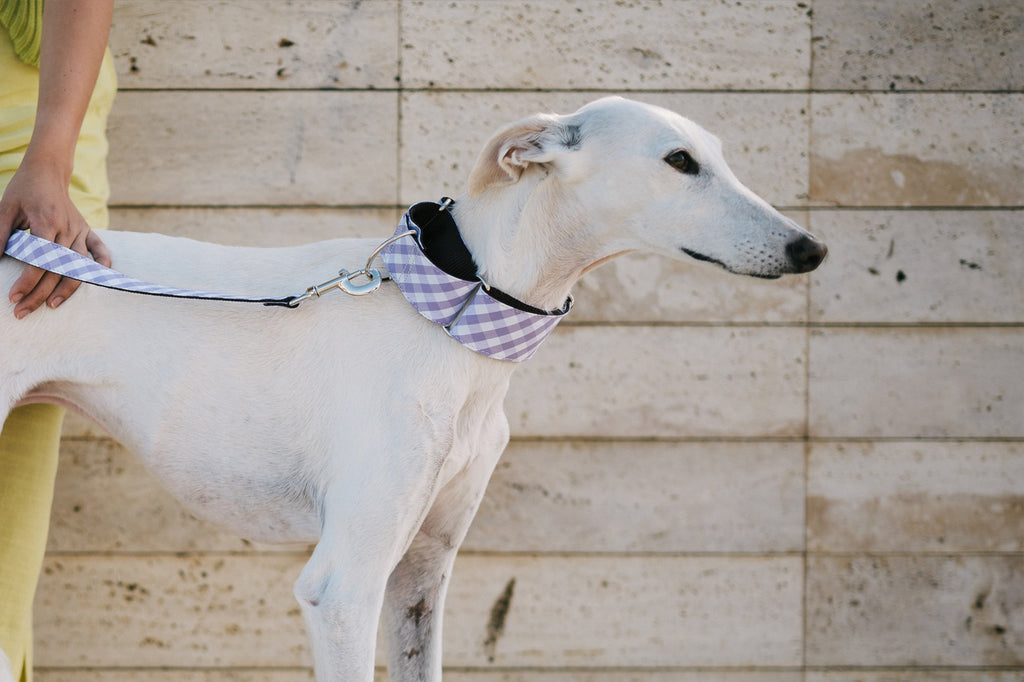
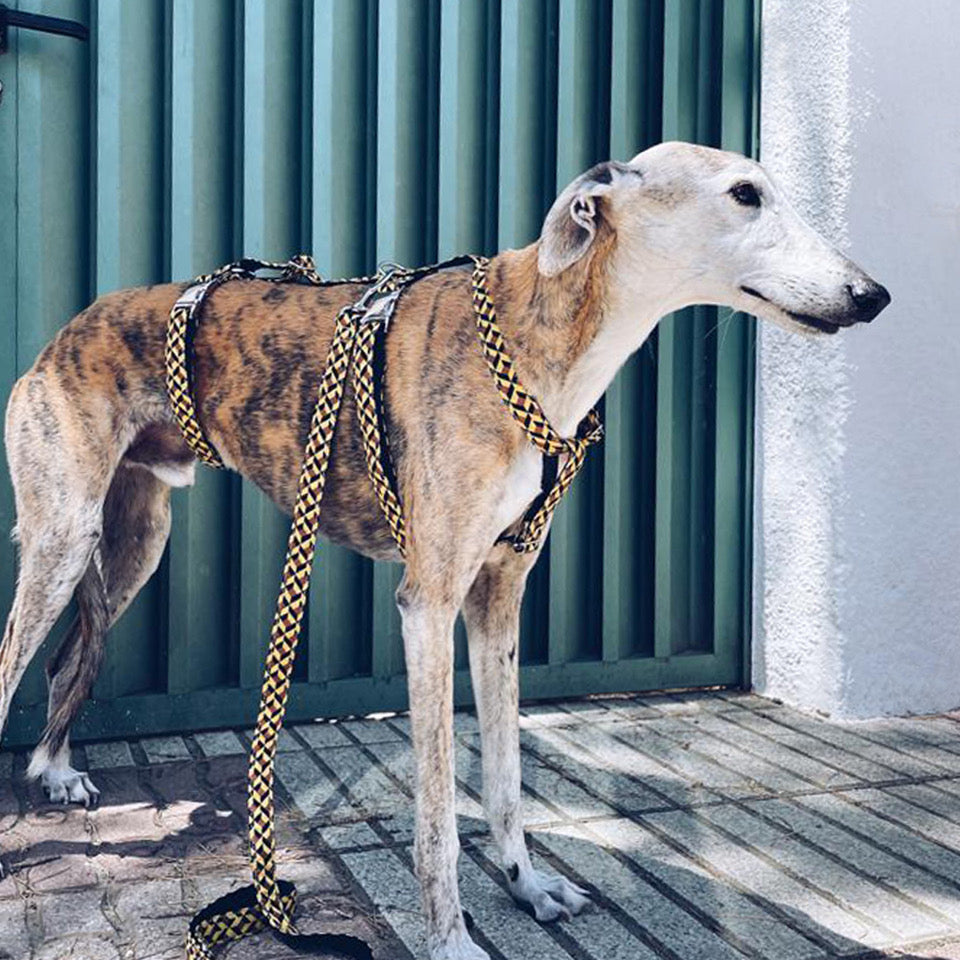




When we think of a greyhound, the image that often comes to mind is a dog running free across open fields, at full speed, wind in its face. And then the question comes up: does it actually make sense to live with a greyhound in the city?
At Brott Barcelona, we're clear on this: yes, it makes complete sense. But like everything, it comes with nuance.
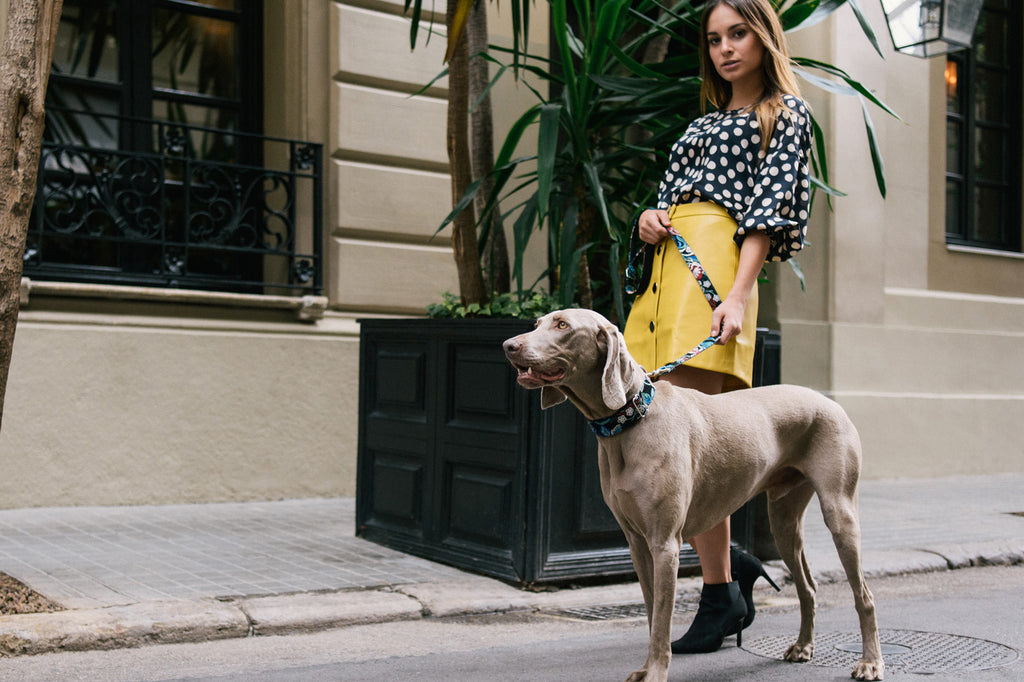
We share our life with Brot and Penny, two greyhounds who've taught us that the city isn't a problem if you understand who they are, what they need, and how to be there for them.
Today we want to share exactly that: an honest look at the challenges, myths, and realities of living with a greyhound in an urban environment.
The big myth: "greyhounds need a lot of space"
This is probably the most widespread myth, and also the most misleading, because yes, greyhounds run fast. But that doesn't mean they need to run all day.
In fact, greyhounds are known for something that surprises many people: they're experts at resting.
Brot and Penny prove it every day. After a walk, what they want most is to lie down, stretch out, and disappear from the world for hours.
A greyhound can live perfectly well in a flat if:
- They get quality walks
- They can release energy at specific moments
- They have a comfortable space to rest
They don't need constant wide-open space, what they need is balance.

The reality: they're calm but sensitive dogs
Living with a greyhound in the city isn't complicated, but it does require understanding their nature.
Because greyhounds are calm, observant dogs, and very sensitive to their surroundings.
This means they can adapt very well to urban life, but it also means they need conscious support. Loud noises, traffic, constant stimulation… all of that is part of city life. And not every greyhound handles it the same way from day one.
Our advice is always the same: patience, observation, and respect for their own pace.
Brot, for example, adapted quickly. Penny needed more time to feel confident in certain settings. And that's fine, because every greyhound is unique.
The city walk: less quantity, more quality
When we talk about greyhounds in the city, the walk is, in our view, a key element. It's worth remembering that it's not about walking more hours, but about walking better, because a good walk for an urban greyhound should include:
- Moments of calm sniffing
- Spaces where they can walk without tension
- A steady pace, without pulling on the leash
- Some controlled off-leash freedom, if possible
We need to understand that the walk isn't just exercise for our four-legged friend, it's their moment of emotional regulation.
Because a greyhound that walks well is a balanced greyhound.

Real challenges of living with a greyhound in the city
Not everything is perfect, and we think it's important to say so plainly. Living with a greyhound in the city can be a truly wonderful experience, but it also has moments that call for more attention, more patience, and above all, more understanding.
Initial adaptation
Many greyhounds come from completely different environments, where the stimuli were different, the pace was different, and, in many cases, their relationship with people was different too. Suddenly they find themselves in a city with constant noise, traffic, lights, intense smells, and movement in every direction. It's normal for them to feel out of place at first.
In those first days, sometimes weeks, that's when it matters most not to rush. There's no need to expose them to everything all at once or "normalise" the city in a couple of walks. It's far more effective to go step by step, repeat calm routes, give them time to observe, and let the environment stop being a threat and become something familiar.

Sensitivity to stimuli
Greyhounds don't react impulsively, but they are highly perceptive. They pick up on changes, noises, or movements that other dogs might not even notice. A bicycle appearing out of nowhere, a shutter slamming down, a group of people talking loudly… small stimuli that, when they add up, can create discomfort or tension.
This is where the way you support them changes. It's not about avoiding the city, but about learning to read how they're experiencing it. Sometimes it's as simple as switching sides of the street, slowing down, or taking a small detour. These are small decisions that help them manage their surroundings better, and that, over time, build trust.
Managing fear
It's not always a clear or constant fear, sometimes it's something subtler: unease in certain places, hesitation before moving forward, or a need to stay closer to you at certain moments.
In those cases, the bond is everything. Not through overprotection, but through consistency. Keeping a stable routine, offering security without forcing anything, and being present without crowding them. It's a balance that's learned over time, but it makes all the difference.
What no one tells you: how easy they are to live with
Against all these challenges, there's something that often doesn't get said enough: greyhounds are incredibly easy to live with at home.
They're wonderful animals known for being quiet, rarely destructive, adapting very well to small spaces, and enjoying some well-earned rest when it's time.
Brot and Penny are the perfect example. At home, they are pure calm, and in an urban environment, that's a gift.

The bond: living with a greyhound changes the way you see things
There's something special about greyhounds. It's not just how they look. It's their whole way of being in the world.
They're dogs that don't react out of impulse, but out of observation. They don't give themselves over right away, but when they do, they mean it. And that completely changes the way you relate to them.
Greyhounds:
- Observe before acting
They rarely rush into anything without thinking. They pause, watch, take it in. This often means we have to adapt our pace to theirs, learn to wait, and to read what they're feeling. Over time, you start to realise that pause isn't hesitation, it's sensitivity. - Trust little by little
They're not dogs that hand over trust from the very first moment. They build it. Day by day. Walk by walk. And that makes every small step forward worth so much more. A gesture, a glance, a decision to come closer… it all counts. - Give themselves fully once they feel safe
And when that moment comes, you notice it. In how they seek you out, in how they rest close to you, in how they move with you without ever needing to ask. It's a quiet bond, but a very strong one.
The bond with a greyhound isn't immediate, but when it arrives… it runs deep.
And the city, far from making it harder, can be the perfect setting to build it. Because it's not about grand moments, but about everything that happens every single day.
Living with a greyhound in the city: a conscious decision
Adopting or living with a greyhound in the city isn't an impulsive decision, it becomes a conscious choice.
It means understanding their needs, respecting their pace, and supporting them through the adjustment process. But it also means discovering a different way of living together. Slower. More observant. More connected.
At Brott Barcelona, we live it every day with Brot and Penny. And if there's one thing we're sure of, it's that we wouldn't trade this way of living for anything. Because in the end, it's not about where you live, but about how you show up for them.
And when there's a bond, any place can be home ❤